Learning Experience Platform
for Upskilling &
Reskilling
One Platform for Learning, Skills and Career Development
Bring learning content, employee skills, skill gaps, learning paths and career development together in one Learning Experience Platform (LXP). Give every employee a clear learning journey based on their role, skills and development goals.
Explore LXP


One Place for All Your Learning Content
Bring internal and external learning resources into one corporate learning platform. Make courses, videos, documents and other learning resources easier to find and use.
Internal Learning Content
Publish and organize your organization's own courses, documents, videos and learning materials.
External Content Providers
Connect learning resources from multiple eLearning content providers and external learning sources.
Multiple Content Formats
Support courses, videos, documents, SCORM content, microlearning and other digital learning resources.
One Learning Library
Give employees one place to discover and access learning content.
Know the Skills Employees Have
Build a clear view of employee skills across teams and departments. Map skills to jobs, competencies and proficiency levels to understand workforce capabilities.
Employee Skill Profiles
Maintain skill information for each employee based on their role and development needs.
Skill Mapping
Map employees to the skills required for their current and future roles.
Skills Matrix
View skills across employees, teams and departments in a structured skills matrix.
Skills Intelligence
Use workforce skills data to understand available capabilities and identify development needs.
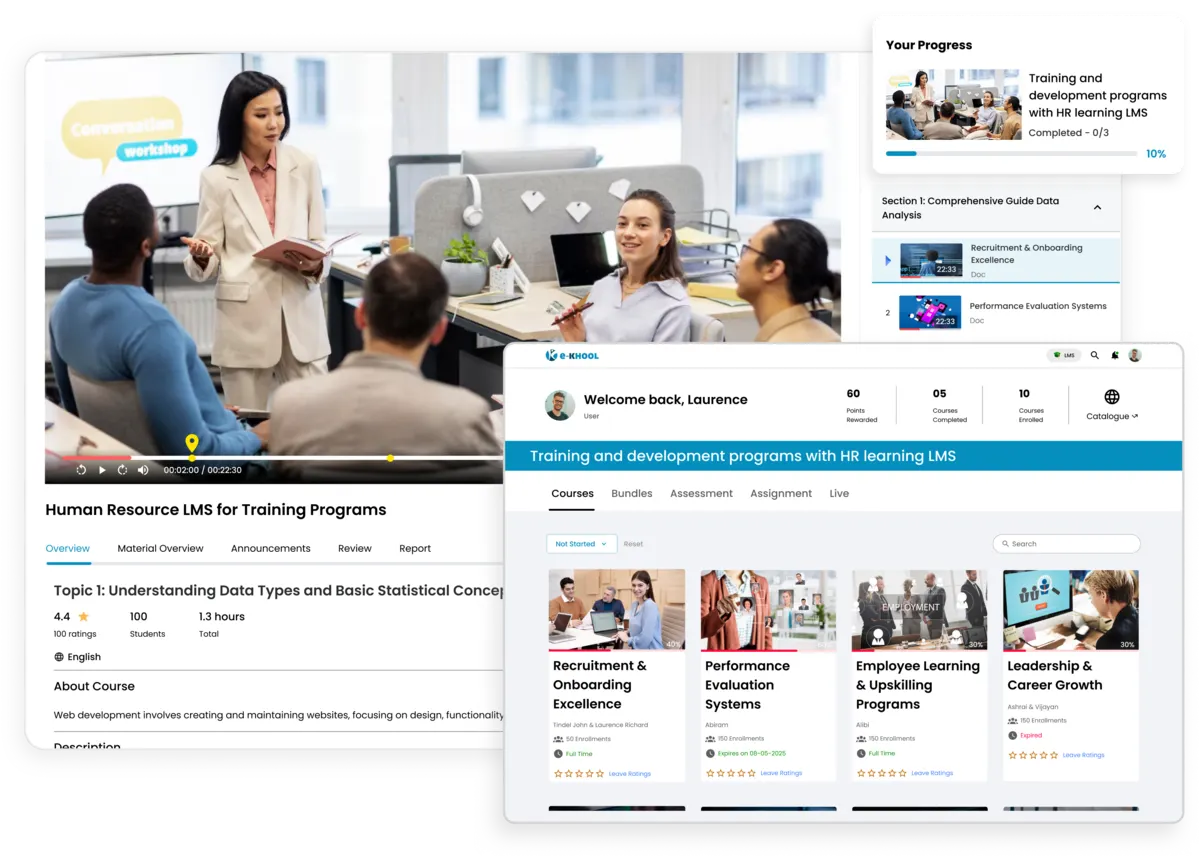
Skill Gap Analysis
Compare employee skills with the skills required for a role. Identify missing skills and use the results to plan learning, development and career growth.
Identify Skill Gaps
Find the difference between current skills and required skills.
Role-Based Skill Gaps
Compare employee capabilities against the skills needed for specific job roles.
Competency Gaps
Identify gaps in competencies required for current or future responsibilities.
Development Priorities
Use skill-gap results to identify where learning and development should focus.
Measure Skills From Assessment to Progress
Track how employees develop their skills over time. Use assessments, proficiency levels and competency data to create a clearer view of employee capability.
Skill Assessments
Assess employee skills against defined requirements.
Proficiency Levels
Track employee progress from basic knowledge to higher levels of proficiency.
Competency Management
Define and track competencies required for different roles.
Skills Progress
Monitor changes in employee skills after learning and development activities.
Give Each Role the Learning It Needs
Connect learning with job roles, required skills and competencies. Create focused learning experiences for employees based on what they need to perform their current role.
Role-Based Training
Assign learning based on job responsibilities and role requirements.
Skill-Based Learning
Connect required skills with relevant learning resources.
Position-Based Learning
Create learning requirements for specific positions, teams and departments.
Adaptive Learning Paths
Adjust learning journeys based on employee progress and development needs.
Connect Learning With Career Goals
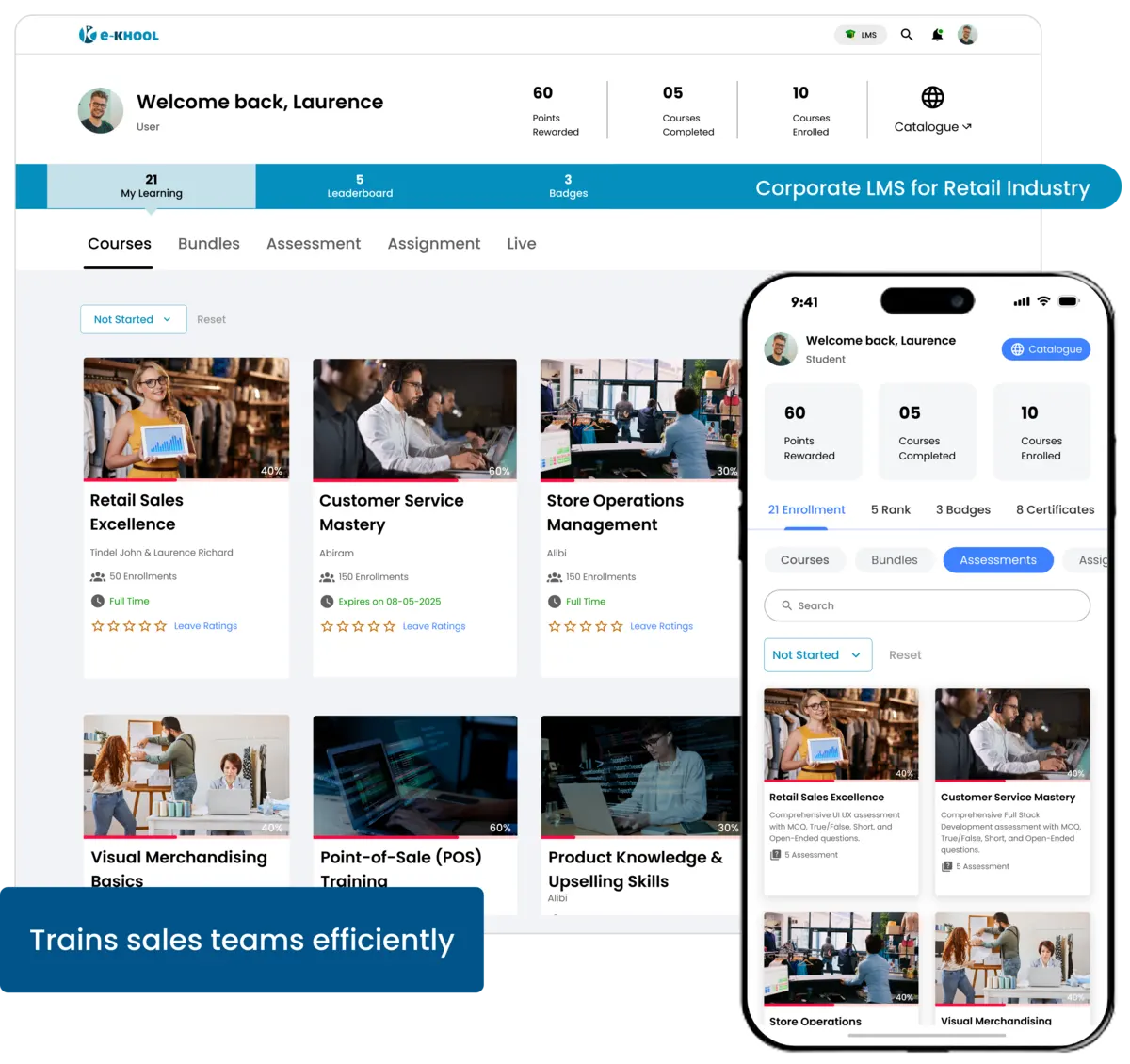
Create structured learning journeys that connect courses, skills, assessments and career goals. Help employees understand what they need to learn for their current or future roles.
Personalized Learning Paths
Career Learning Paths
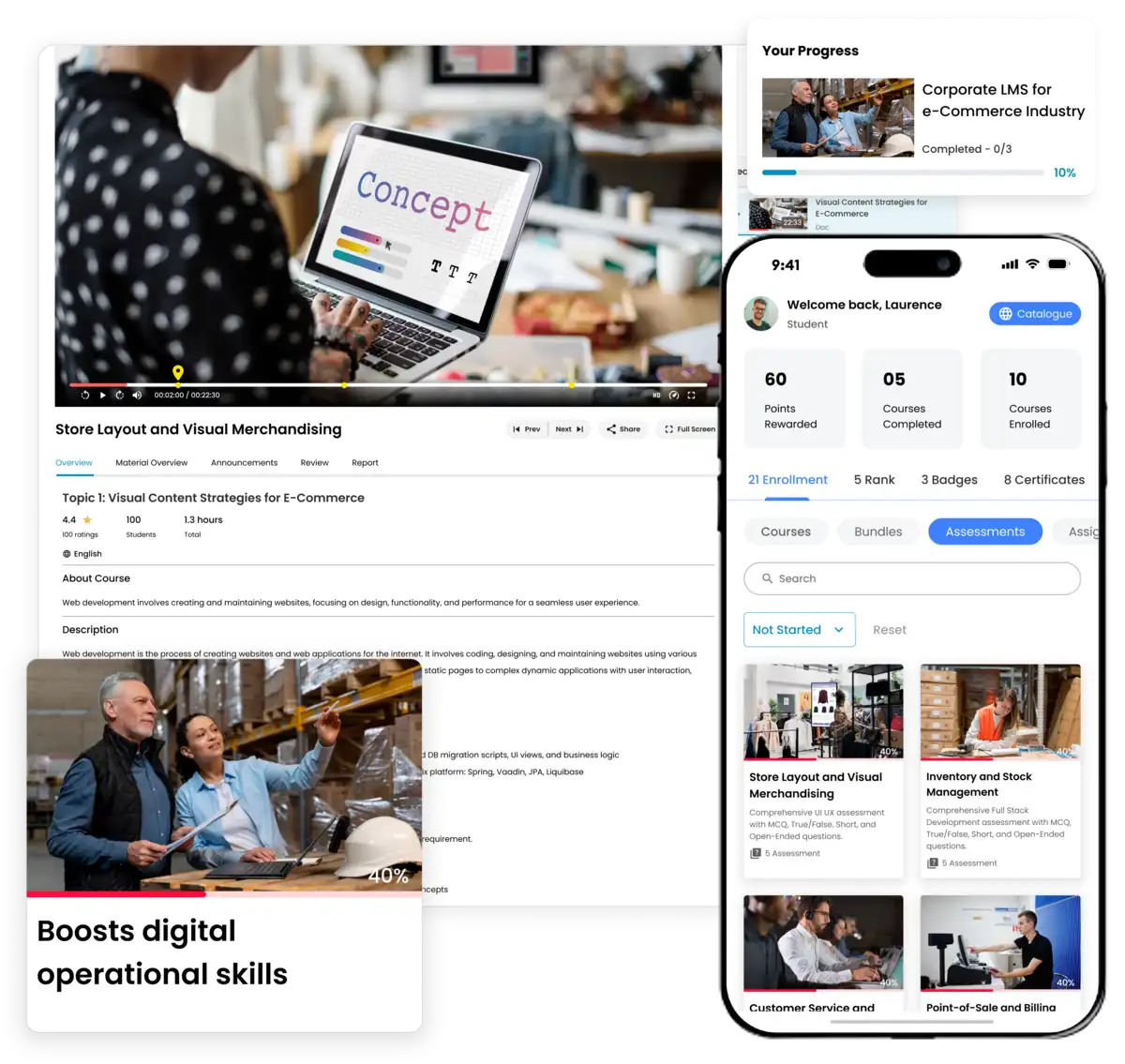
Learning Journey
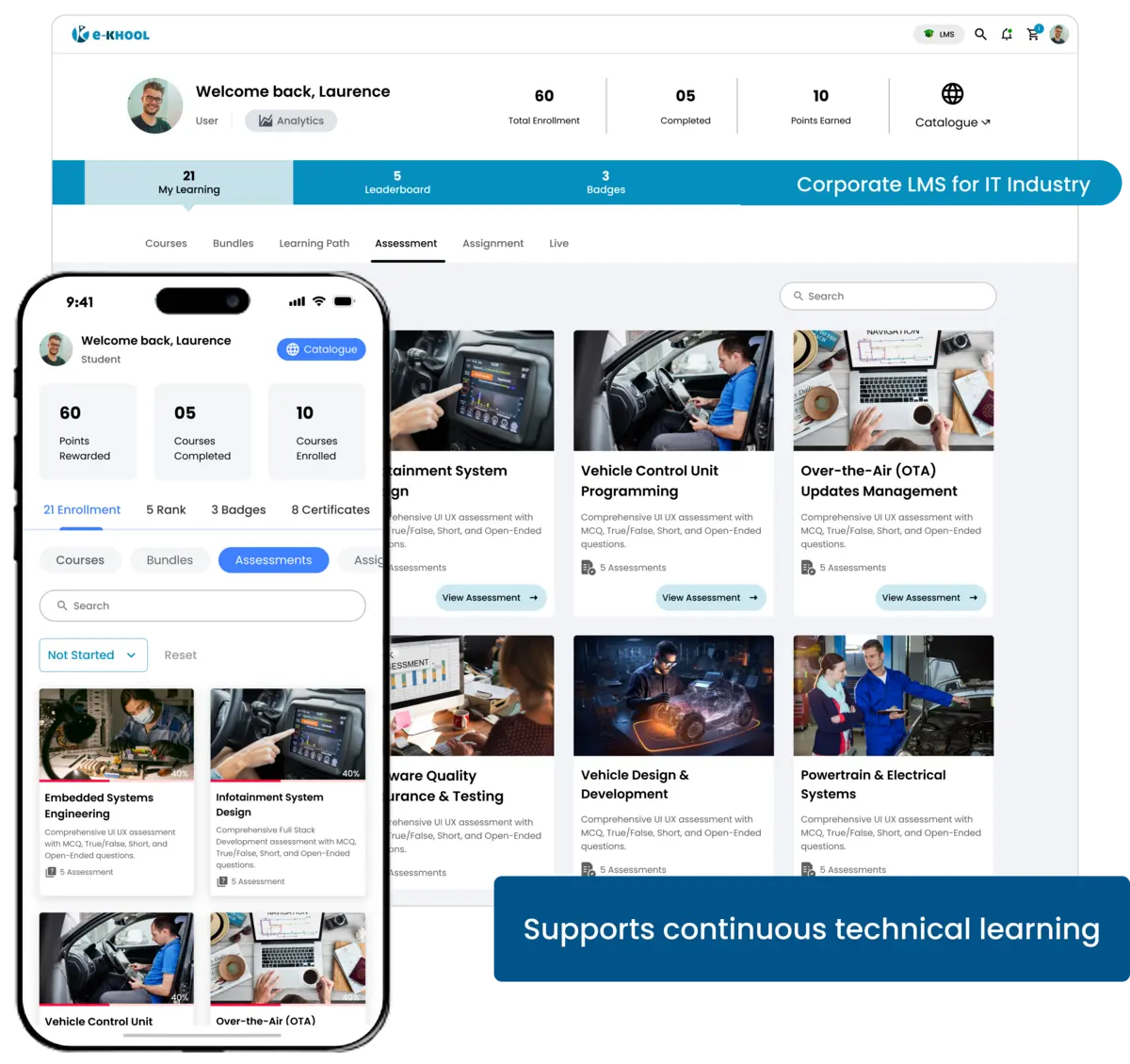
Employee Development
Build Skills for the Next Role
Turn skill gaps into focused development plans. Prepare employees for new responsibilities, changing job requirements and future career opportunities.
Upskilling
Build additional skills required for an employee's current role.
Reskilling
Develop new skills for employees moving into different roles.
Role Readiness
Measure whether the employees have the skills required for their next role.
Career Pathways
Connect skills and learning with possible career movements.
AIRA AI for Learning, Skills & Development
Use AI to make learning and skills management more useful and easier to navigate. Support employees and L&D teams with AI-driven learning and development assistance.
AI Learning Assistant
Ask questions, find learning resources, summarize content and get support without leaving the learning environment.
Learning & Knowledge Support
Let AIRA work across internal knowledge and learning resources to help employees find relevant information, courses, and learning materials when they need them.
Skills & Development Insights
Use employee roles, skills, learning activity and assessment data to help identify development needs, skill gaps and areas that require attention.
AI-Powered Learning Actions
AIRA can support learning workflows such as finding relevant learning, assisting with development activities and connecting employees with the next steps in their learning journey.
Turn Learning Data Into Measurable Results
Connect learning, assessment and skills data to see measurable improvements in workforce development. Give L&D teams the visibility to track progress, identify gaps and improve learning outcomes.
Identify workforce skill gaps faster by connecting employee skills, role requirements, assessments and learning activity in one platform.
Improve learning activity and learner behaviour by connecting employees to relevant learning experiences.
Track learner progress, identify drop-offs and use targeted interventions to improve course and programme completion.
Connect learning paths, assessments and skills development to help employees progress toward defined role and competency requirements.
Turn Learning and Skills Into Business Outcomes
Connect learning with skills, career development and internal mobility to build a more capable, adaptable and engaged workforce.
Organizations with a strong learning culture showed 57% higher retention than the baseline group in LinkedIn's analysis.
Strong learning cultures were associated with 23% higher internal mobility, helping organizations move skills and talent across roles.
Organizations with strong learning cultures showed 7% higher promotion rates into management compared with the baseline group.
55% of career-development-focused organizations measure the number of employees developing new skills as an outcome of their programmes.
48% measure employee promotions to understand the impact of career development.
84% of employees surveyed agreed that learning adds purpose to their work, reinforcing the connection between learning and employee experience.
Keep Learning, Skills and Employee Data Connected
Connect the LXP with the systems already used across your organization. Bring learning, performance, employee and compliance information into connected workflows.
LMS
Connect structured learning, course management and formal training.
HRMS
Connect employee, role and organizational information.
PMS
Link employee learning with goals, performance and development plans.
GRC
Connect compliance requirements and mandatory learning with employee development.